H Pylori Antigen Stool Test
H Pylori Antigen Stool Test. Random Faeces Stool Sample.
- At-home test
- Doctor reviewed
- 1 biomarkers
- Results in 5 days
This test looks for Helicobacter Pylori in the blood. This bacterial infection of the stomach lining may lead to ulcers in the stomach, increasing the risk of stomach cancer.
1 biomarker as listed by Bluecrest Wellness.
This test looks for Helicobacter Pylori in the blood. This bacterial infection of the stomach lining may lead to ulcers in the stomach, increasing the risk of stomach cancer.
Helicobacter pylori (H. pylori) is a common bacterial infection that can irritate and damage the stomach lining, increasing the risk of stomach ulcers, gastritis, and in some cases, more serious complications. Because symptoms can be vague or easily overlooked, testing plays an essential role in early detection and treatment.
Our private Helicobacter Pylori Test offers a quick, accurate way to check whether you have an active infection. It's included in our Female Cancer Risk Test and Male Cancer Risk Test packages, and it can also be booked individually or added to any health MOT to create a personalized health assessment.
Explore our packages and book online today.
H. pylori often causes few symptoms until the infection has progressed, which is why testing is recommended if you're experiencing ongoing digestive discomfort or have had issues such as ulcers in the past. Common Helicobacter pylori symptoms include:
Testing is particularly important if you have:
Left untreated, H. pylori can increase the risk of ulcers, chronic gastritis, and in a small number of cases, certain types of stomach cancer. Early detection allows you to begin treatment before complications develop.
H. pylori can be identified through several testing methods. Bluecrest Wellness provides a blood test to check for antibodies that indicate the presence of an infection. This is quick, convenient, and minimally invasive. Below are the most common testing methods:
Blood test (offered by Bluecrest Wellness) A small blood sample is taken and assessed for H. pylori antibodies - proteins your body produces in response to infection. This test is simple, fast, and suitable for most people.
Urea breath test You swallow a small amount of urea. If H. pylori is present, it breaks the urea down into carbon dioxide, which is detected in your breath sample.
Stool antigen test A stool sample is tested for antigens linked to H. pylori bacteria.
Description provided by Bluecrest Wellness.
This test belongs to our H. pylori test comparison group. See how it stacks up against equivalent tests from other providers.
H Pylori Antigen Stool Test. Random Faeces Stool Sample.
H. pylori is a common stomach bacteria that can lead to digestive discomfort, ulcers and long-term issues if left untreated.
Stomach pain around mealtimes? Bloating? Nausea? H. pylori affects 1-in-5 of us and might be to blame. Take a quick and easy stool test to find out.
H. pylori (Helicobacter pylori) is a type of bacteria that can cause ulcers in the lining of your stomach or the upper part of your small intestine.
A test for Helicobacter Pylori.
This self collect faecal sample test can identify if the H. Pylori bacteria is present in your digestive tract.
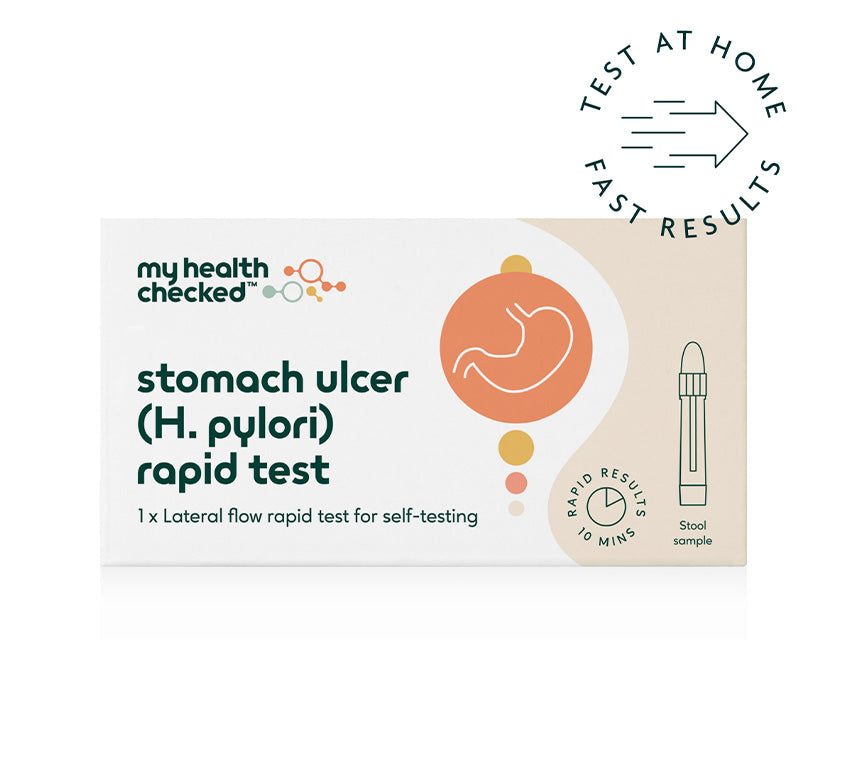
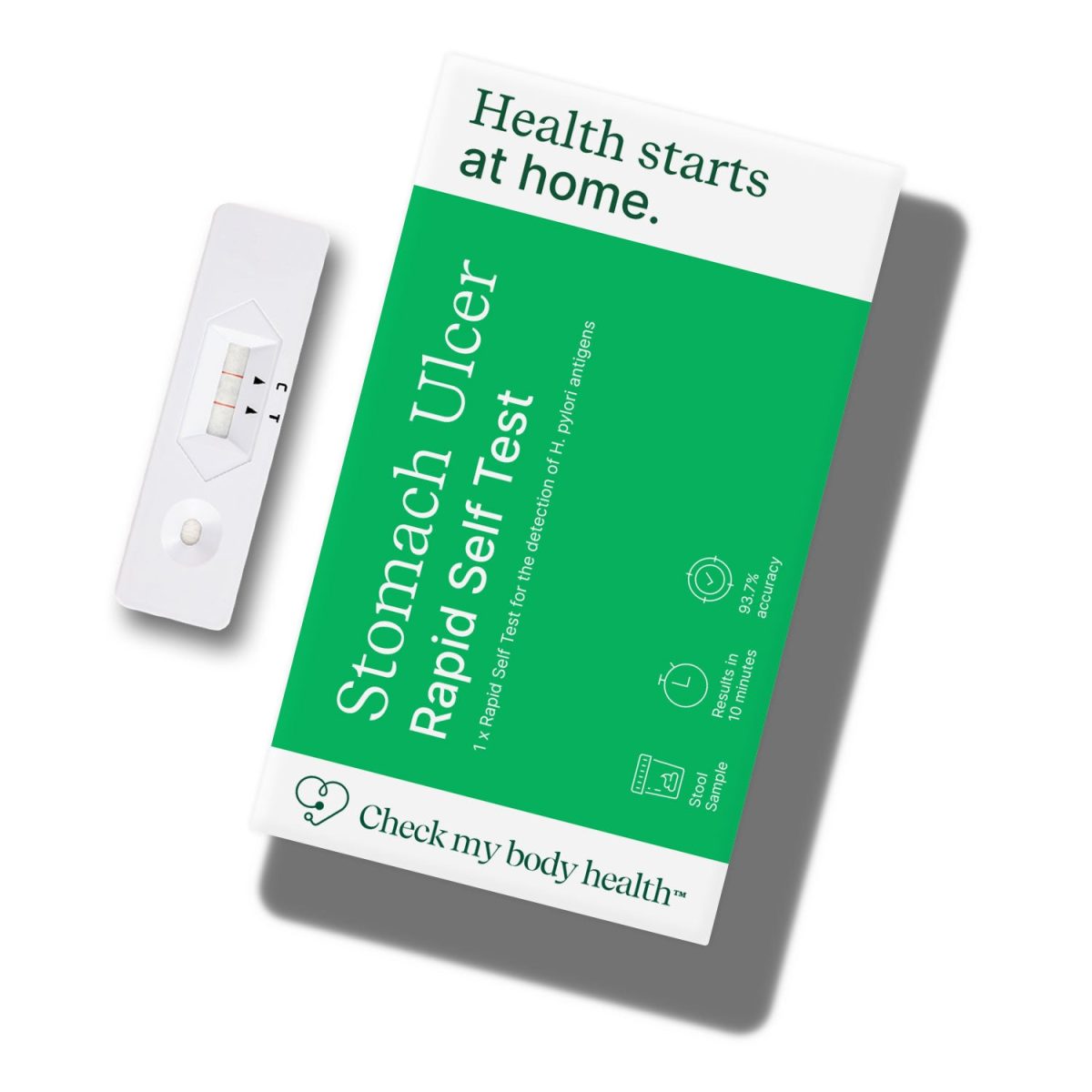
Stomach Ulcer (H. Pylori) Self Test is a non-invasive at-home test for detecting Helicobacter pylori, an infection associated with several gastrointestinal diseases including gastro ulcers.
Stomach Ulcer (H. Pylori) Self Test is a non-invasive at-home test for detecting Helicobacter pylori, an infection associated with several gastrointestinal diseases including gastro ulcers.
H. pylori is a common stomach bacteria that can lead to digestive discomfort, ulcers and long-term issues if left untreated.
Stomach pain around mealtimes? Bloating? Nausea? H. pylori affects 1-in-5 of us and might be to blame. Take a quick and easy stool test to find out.